
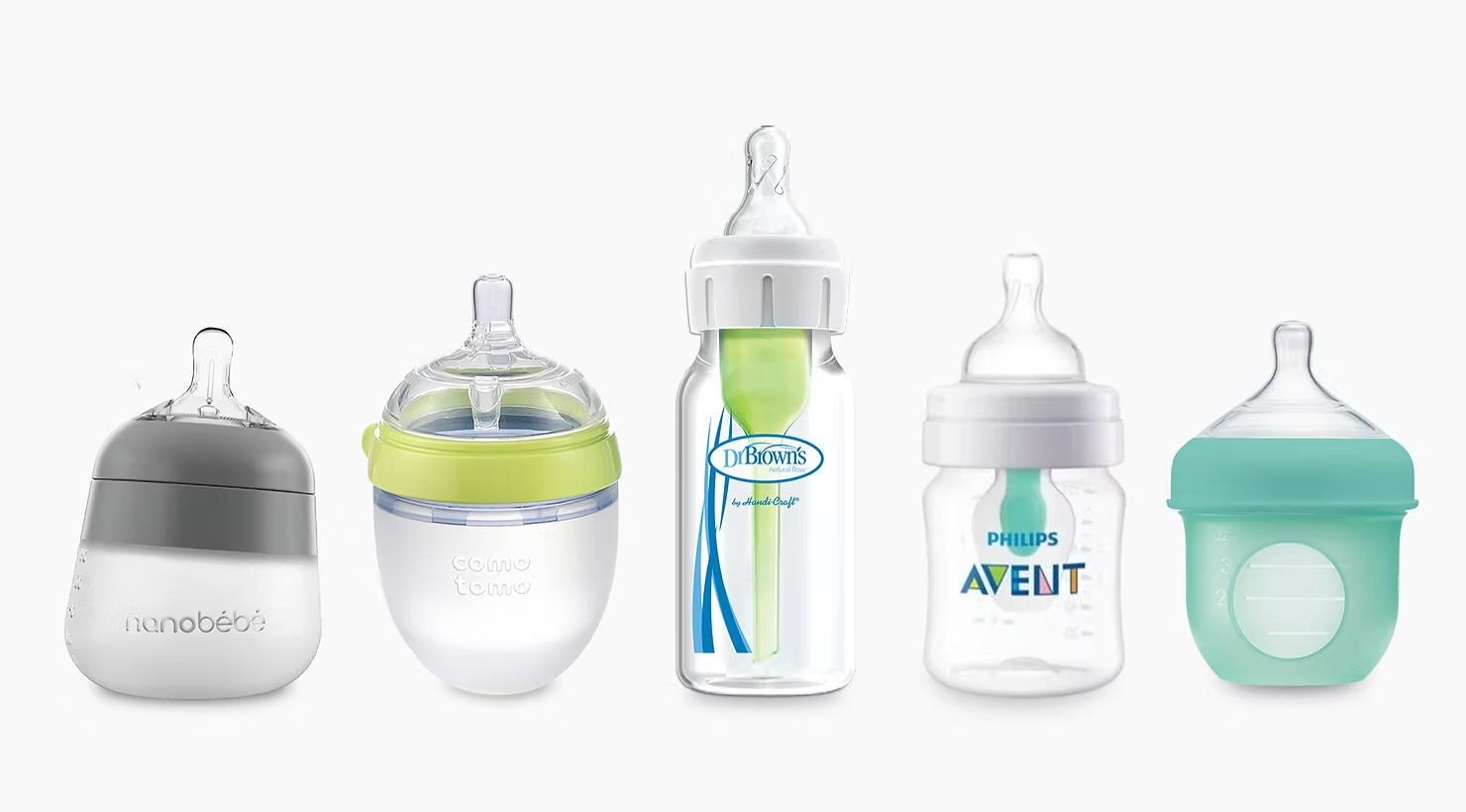
Have you ever wondered how crazy it is that so many bottles are marketed as “like the breast” yet they all look wildly different?! Also, spoiler alert, a women’s breast at rest looks absolutely nothing like the shape of her breast when her infant is feeding from it. So let’s get past this “like the breast” marketing tactic and talk about what we’re really looking for in a bottle or pacifier. When we think about bottles and pacifiers, we focus more on how they impact oral motor function and not what they look like per se, but there is some overlap here so I’ll break it down further by looking at the different areas of function we want to think about. And remember, brands will change over time, so the takeaways here aren’t necessarily the specific brands I mention but what we’re looking for to optimize oral motor function.
*A brief note – I consistently compare oral motor mechanics on bottles and pacifiers to those when breastfeeding because these mechanics developed and evolved to allow infants to breastfeed and have implications far beyond just feeding as they influence oral and facial development as well. So even if you never intend on breastfeeding your baby, we still want to optimize their oral motor mechanics as if they were breastfeeding to support overall oral and facial development.
Deep latch
This concept mostly applies to choosing bottles. During ideal breastfeeding, the mother’s nipple is far back in the infant’s mouth at the area of the soft palate (so behind the hard top of the mouth). To support optimal oral motor and tongue mechanics, we want the bottle to also promote a deep latch for the infant. Therefore, I almost never recommend any bottles that go from really narrow at the tip to really wide at the base (like to comotomo or nanebebe in the picture above) because the infant almost always latches right at the tip, encouraging a more chompy suck pattern. On the other hand, narrow neck bottles (like the Dr. Brown’s – paid link) are easier to achieve a deep latch. The third shape of bottle is more of a sloped nipple – so the base of the nipple is wide but the nipple more gradually goes from narrow to wide (like Lansinoh, Pigeon, or Nuk Perfect Match – paid links). Infants can often still achieve a nice latch on these and could be a good option, especially if your infant doesn’t take to the Dr. Brown’s well.
Tongue cupping and elevation
This concept is most relevant to choosing a pacifier. When breastfeeding, infants need to have tongue cupping (so the sides curling up) to create suction and hold onto the breast. In addition, they need to elevate their tongue while sucking on the breast to extract milk. Therefore, in an effort for pacifiers to reinforce these motions we want ones that remain narrow at the end. I’ve seen some pretty popular pacifiers recently that almost look like a lolli-pop on the end. Despite these being really popular, I do not recommend them. They basically can just sit in the infants mouth without the infant needing to do anything to keep them there. Instead pacifiers that stay narrow (or get more narrow from base to tip) are preferred. The Ninni and Momi pacifiers are both higher end options that support both tongue cupping and tongue elevation due to the shape and softness of the silicone. The avent (paid link) is a more widely accessible, economical option that works well too.
Suction (flow rate)
Similarly to above, the last piece to the puzzle we want to think about is suction. Here, we’ll think about it in relation to the flow rate of bottles. If a bottles flow rate is too fast for your infant, they will naturally reduce their suction so they don’t get overwhelmed by the amount of milk they get. This may make feeding “easier” but it leads to decreased strength of the oral musculature. Alternatively, if the flow is too slow for your infant, they will get frustrated at how little milk they get and feeding may take very long for them to get the full amount of milk. An important consideration here is when you are breastfeeding and bottle feeding your infant – you want to be especially mindful of not letting the bottle flow rate be too fast otherwise your infant may start to prefer bottle feeding to breastfeeding.
A Note About Special Circumstances
There are a variety of specialty bottles on the market as well as some bottle shapes that I wouldn’t necessarily recommend to just anyone but do use them for a specific purpose for some infants. So if you are having significant difficulty in feeding your infant, I recommend getting an evaluation from a feeding therapist (typically an OT or SLP) for more individualized support.
*As an Amazon Associate I earn from qualifying purchases.
Leave a Reply