
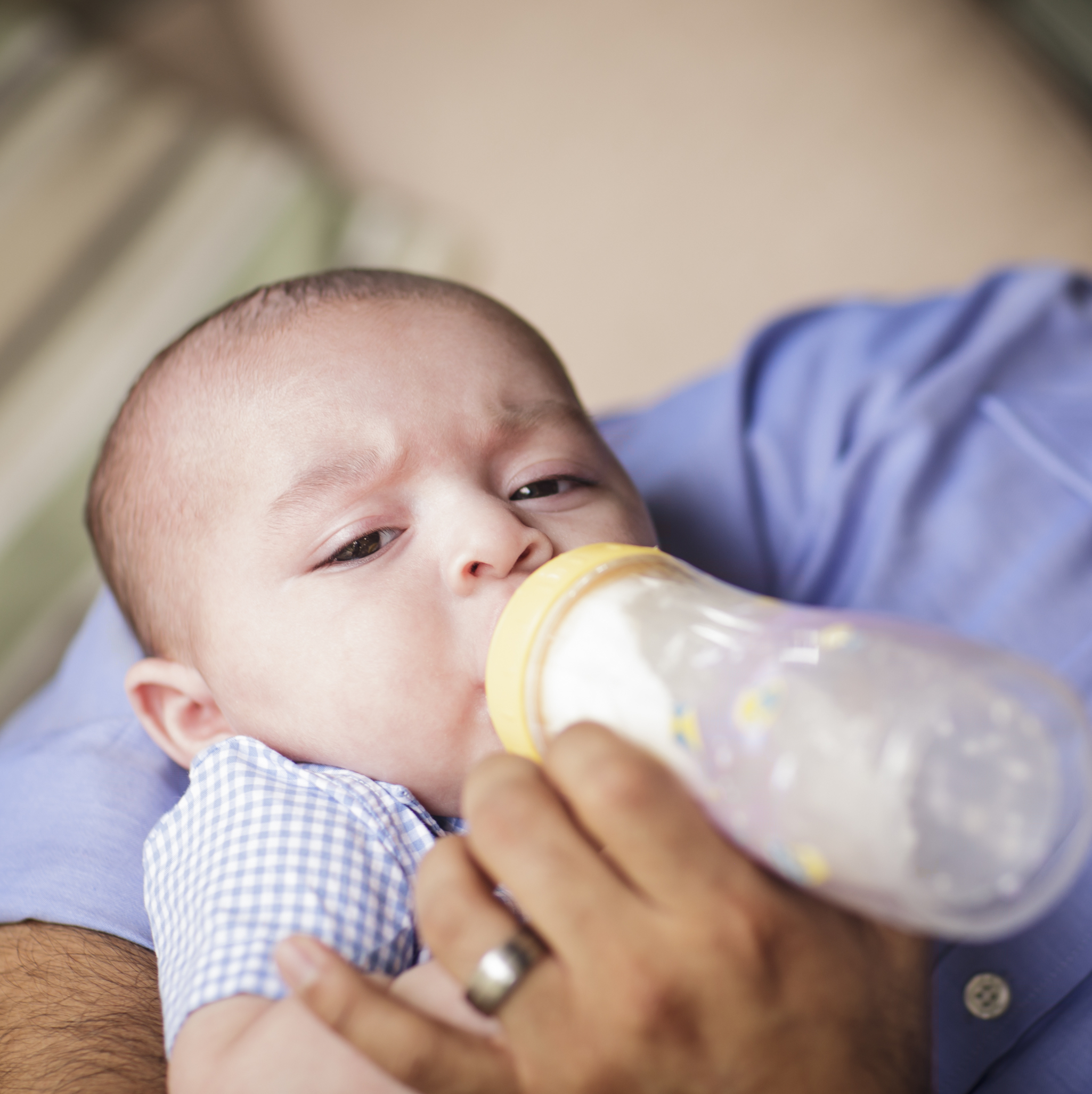
Breastfeeding is about much more than just food.
Breastfeeding is a multi-sensory bonding experience for infants. They get comfort, nervous system regulation, olfactory (smell) stimulation, and proprioceptive feedback (from being held against mom’s body). It is not solely a 1:1 transaction – I’m hungry, here’s food – type of situation. However, bottle feeding can often feel more transactional to an exclusively breastfed baby and thus they politely (or adamantly) decline.
Tip 1: Provide other supports in addition to offering the bottle like rocking, bouncing, holding close – whatever typically helps your infant soothe.
Learning to bottle feed is like learning a new skill.
For babies who aren’t familiar with bottle feeding, the whole experience can feel foreign to them. Instead of just switching from one form of feeding to another, they seem to not know what to do with the bottle nipple in their mouth and often end up chomping on it. This is especially the case if the infant is older than 3 months. Now imagine trying to learn a new skill when you’re very hungry. Do we do anything well when we’re very hungry? Most of us would not be at our best, so it’s understandable that your baby isn’t either.
Tip 2: Try offering the bottle before your infant is very hungry, ideally about 15-30 min before they would typically eat next.
Re-warmed breastmilk doesn’t always taste the same as the fresh stuff.
Some women have what is referred to as “high lipase milk.” While there is absolutely nothing wrong with this and it is completely safe for baby, it can taste different when re-warmed in preparation for a feeding. If this is the case, part of the difficulty with accepting the bottle could be related to baby not preferring the taste of the milk.
Tip 3: Try bottle feeding freshly expressed breastmilk. If baby still refuses this, a taste preference is less likely the culprit.
The bottle shape or flow may be too different from the breast.
Typically for infants who breastfeed, I first trial a bottle that gradually transitions from a narrow tip to a wider base. The bottle nipples that have a very narrow tip and then quickly transition to a fat base (like the como tomo) tend to actually promote a very shallow latch from the infant – despite be marketed as “like the breast.” Examples of bottles I usually recommend are: Pigeon, Lansinoh, and Nuk Perfect Match. The Gulicola is also similar but I do not have personal experience with it (paid links).
Additionally, the flow rate of the bottle may be significantly slower or faster than your baby is used to and thus lead to frustration. You can try a flow rate faster or slower based on which you suspect may be the case. Also note that the flow rate from one brand doesn’t mean anything compared to a flow rate from another brand, so when if you’re changing bottle brands, don’t assume a 0+ flow in one is equivalent to the 0+ flow in the other.
Tip 4: Look for a bottle shape and flow rate that most closely aligns with what the infant is used to while breastfeeding.
You may just have to ditch the bottle entirely.
If your infant is 5 months or older and beginning to show readiness for solid foods, you could offer a straw cup to help your infant start learning how to drink from it. Given that this is a new and exciting endeavor (to your infant), they may take to this more readily than to trying to drink from a bottle. I recommend starting with straws that have a valve in them initially so that you baby doesn’t get wayyyy more liquid than they bargained for and start coughing.
Tip 5: If your infant is 5 months or older and beginning to show readiness for solid foods, try offering a straw cup instead of a bottle.
*As an Amazon Associate I earn from qualifying purchases.
Leave a Reply